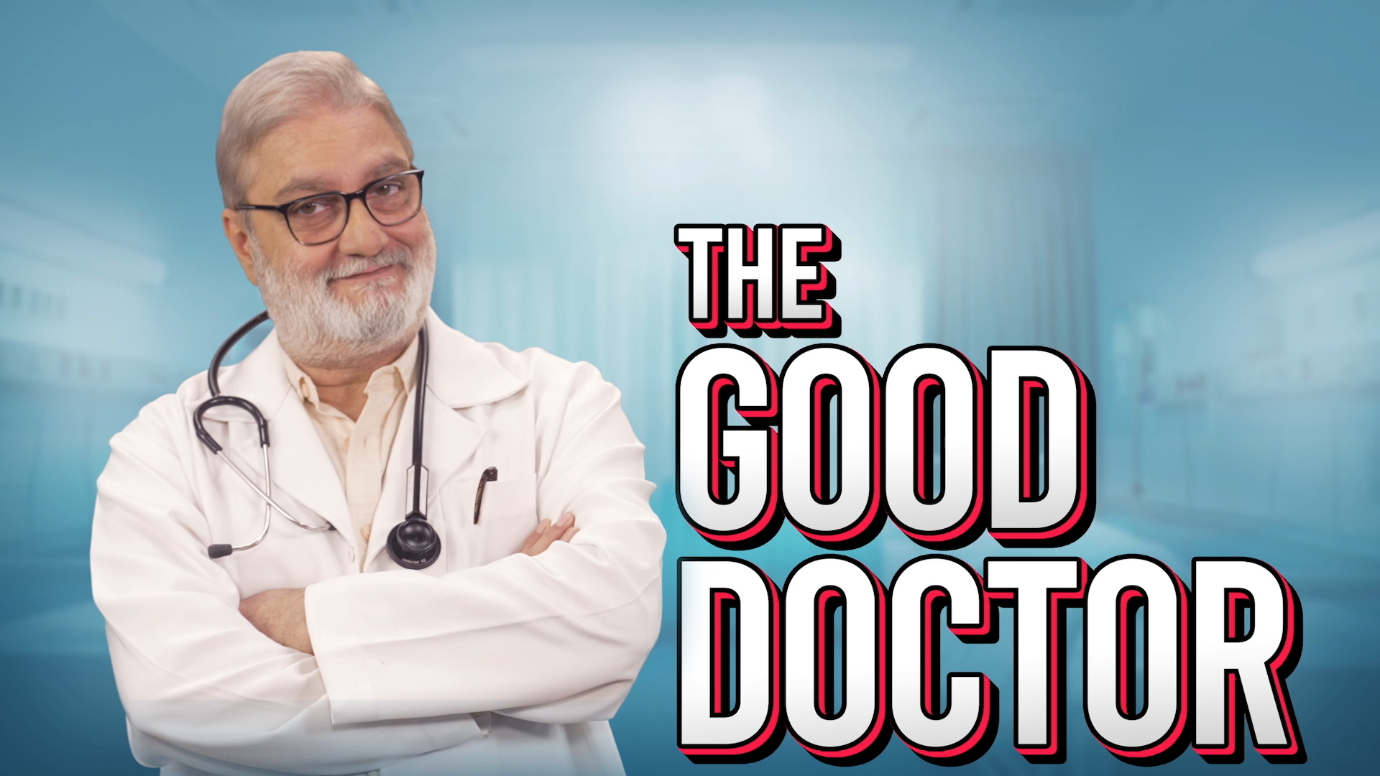
Centre for Health and Enquiry into Allied Themes (CEHAT) in collaboration with Agents of Ishq have created a six part video series titled “Good Doctor”. The series addresses an important question in health care delivery – “Who is a good doctor?” Each of the six videos is around 10 minutes in running time. Each episode in this series depicts important aspects of patient care including empathy, understanding social determinants of health, including them in clinical decision making, ethical issues including autonomy, right to health care, and gender sensitive health care. These are important aspects of the practice of medicine which are often overlooked. These videos are in Hindi with English subtitles. They combine humour, depiction of realistic clinical scenarios from the Indian context, and intelligent use of dramatic elements to convey these important messages.
There are two main characters Dr. Hoshiyaar, the young resident doctor in training played by Sawan Tank and Dr. Dildaar, the senior practitioner with practice and wisdom of age and experience played by Vinay Pathak. The names of these characters are interesting aptonyms, with Hoshiyaar meaning smart in Hindi and Dildaar meaning warm-hearted. They represent the young trainee doctor with a lot of knowledge and smartness but lacking the wisdom and experience and the senior mentor with the wisdom that comes with years of practice and understanding of the ground realities. In each episode the senior doctor guides and mentors the resident to become a “good doctor”. Every doctor can instantly connect with the rookie mistakes that Hoshiyaar makes and the way Dildaar patiently and calmly teaches him the ropes. The representation of the mentorship and the warm relationship between the mentor and mentee is endearing and reminded me of how I sat by the side of my mentors and learned medicine from them. Both the actors do an excellent job in communicating the core messages. Hoshiyaar’s reactions when he realizes his mistake and when the bulb of knowledge lights up in his brain is realistic. Dildaar makes one wish that they had a doctor like that, with his absolute kindness and empathy. The two characters make the whole series relatable and ground them to the typical Indian clinical setting. However, I found myself wondering why both had to be men. Was it a conscious choice to represent the dominant gender bias in the profession? Was it a choice made to specifically depict how male doctors find it challenging to see the clinical encounter with the female perspective? Though the two lead characters were highly relatable and effectively communicated the key messages, the woman doctor was conspicuous by her absence. Most medical colleges nowadays have greater proportion of women in the MBBS course. Women are entering into postgraduate courses like surgery, orthopedics etc. which were previously dominated by men. Though women doctors still must struggle to get the recognition and respect from patients which a male doctor easily gets by default, the scenario is fast changing.
Besides the core messages including empathy, ethics, right to health, autonomy, respect, gender sensitive care and support to a survivor of domestic violence, I found some subtle messages in the videos very interesting and relatable. In the first episode Dr. Dildaar tells Hoshiyaar, “patient care is not a T20 match. It is a test match. One must stand their ground and play a long innings”. It was a beautiful sports metaphor which is instantly relatable and conveys a strong message. Caring for a patient cannot be just a flash in the pan. It must be a consistent and long standing process. Often in case of disease like diabetes, hypertension, heart diseases etc. the treatment is lifelong. It requires a lot of patience and long term engagement. This is a very important message. In episode 2 which covers issues faced by persons belonging to gender minorities while seeking health care, after an epiphanic realization Hoshiyaar makes a comment, “It is not sufficient if a doctor is Hoshiyaar, he must be Dildaar”. This line captures the entire essence of the video series and the choice of names for the two characters. The director of the series, Parvati Balagopalan makes a brilliant choice of mentioning it in the passing in the second episode, not right in the beginning, not later in the series, but in the second episode, when we have heard their names enough number of times for it to register, and we understand the choice of names for the remaining 4 episodes.
The people who played the role of the patients, especially the young girl with urinary tract infection, the young woman with mental illness, the woman with pulmonary tuberculosis, all did a fantastic job. When Dildaar demonstrated empathy and was the “good doctor” to them, or when Hoshiyaar learned the right way to treat them and demonstrated it, they expressed gratitude that was so beautiful. I have seen the same gratitude in some of my patients and therefore I know that was perfect representation. In episode 4 where Hoshiyaar learns the importance of sex education and importance of teaching proper menstrual hygiene to young girls, he doubts about what a doctor can do to change things? He asks, “Can I change the world?”. To this Dildaar gives an excellent reply. He says, “You may not change the world. But you made a world of difference to this one patient. You changed the way they see the world. One patient at a time, you can change the world view of people”. I found this message to be profound. Ultimately what is the world? The world is the way I see things around me, the way I perceive them and relate to them. If that can be changed for one person through awareness generation, isn’t that changing the world?
Another very delicate and sensitive message that was built into the video was in the final episode on mental illness. Dildaar asks Hoshiyaar not to judge, be free of bias and just focus on facts. He refers to the gender stereotype that women are prone to emotional outbreaks and mental illnesses. While teaching the importance of having an open mind, Dildaar says, “Where there is a possibility of bias, there is a choice to change the mindset” The very fact that we are able to make a choice to blindly believe gender stereotypes also means that we can open our minds and make a conscious choice to change our mindset. He very simply and beautifully says that it is a matter of choice of what to believe and want to see.
All the scenes take place in an out-patient clinic. There is almost no examination of the patients during these clinical encounters. It may not be feasible to show this within a short 10 minute video, but the importance of the ritual of clinical examination, the importance of the stethoscope in the clinical encounter and the importance of therapeutic touch can never be over-emphasized. Another thing I found glaring was the representation of the staff nurse in the clinic. I understand that this is a video for communicating about doctor-patient interactions, but reducing the nurse into a “property” in the background just escorting patients in and out is a gross under-representation of her role in the clinic. The nurse plays a far more important role in the clinic. She is often the first point of contact. She has the skills and tools to elicit a far more efficient social history from the patient. I have found the small snippets that our staff nurses add about the patients when they come in to be very useful in arriving at clinical diagnoses. “This patient lives alone, and keeps referring to her son and how much she misses him”, “This patient lost her dog recently”, “This patient may not be able to afford the intravenous fluids, do you want to write off the bill” such small comments from the nurse have greatly influenced diagnostic and treatment decisions. Representation is crucial and if there was one scene where the nurse came and gave an important social history to the doctor before sending the patient inside, or performed a procedure or dressing on a patient, that would have been far more respectful of the nursing profession.
Some important intersectionality of religion, caste, class, and disability with gender and sexual orientation greatly determine health care access and quality of health care. These could be considered for future videos. While being a “Good Doctor” is an important thing, the problems plaguing the health care system in India cannot all be solved just by an individual clinician’s empathy and compassion. There are other major structural issues including overcrowded hospitals, lack of time for the clinical encounter, poor health care infrastructure, poor accessibility of health facilities, inadequate supply chain and stock out of drugs, poor quality of drugs etc. A “Good Doctor” alone cannot make the health care experience adequate. Health systems cannot function based on the goodness of individuals alone. This message is also crucial.
Overall, the series can be a very useful tool for teaching doctor-patient relationships, doctor-patient communication, medical ethics, right to health and gender sensitive health care. It can be a starting point for discussions on these issues. My best wishes to the producers and all people involved in the making of these videos. The videos can be seen on YouTube in the links provided below:
Links of YouTube Videos of GOOD DOCTOR SERIES for teaching & training in medical Colleges, Schools- College and Universities across disciplines, for public education on duty bearers' ethical conduct and patient's rights
Collaborative Creative Journey of CEHAT & Agent of Ishq
Trailer
https://youtu.be/2Rm0H56Rdfg?si=PjjuoM27UhC00zL_
Episode 1: Marz, Mareez, Majboori
https://youtu.be/Fn9gl3Eea7c?si=bE8bEq_tFD5GpsWP
Episode 2: Same Nahin Par Equal
https://youtu.be/czTWornx5AI?si=a7lh29txrxXesTOD
Episode 3: Jiski Body Uski Choice
https://youtu.be/PlJCh_UqGZU?si=ndxFxMV17oyhAoTr
Episode 4: Wahan, Woh, Aisa, Waisa
https://youtu.be/SouOBRjfC8E?si=Dni2v0Qu6tyOKUzl
Episode 5: Pati, Patni Aur Patriarchy
https://youtu.be/rFj3b0ccpkk?si=1x4IdWlOOWqlcxAV
Episode 6: Dimaag Dekho Dil Se
https://youtu.be/F8ZFDjiRErQ?si=AfHzNnqrHvk0YGwj
The article on video series of Centre for Inquiry into Health and Allied Themes and Agents of Ishq provides an illuminating tribute to gender sensitive and ethical approach in patient care.
ReplyDelete